The Little House That Needed a Witch
by Floris Books • 22 April 2026 • Picture Books • 0 Comments
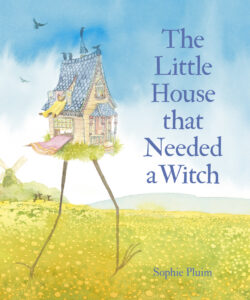
Deep in the forest sat a little witch’s house, but the old witch who’d lived there had gone for good. The little house felt empty and alone. As the seasons changed, grass grew tall around it and mushrooms began to sprout from its roof. The little house knew it must find a new witch or it would fall down.
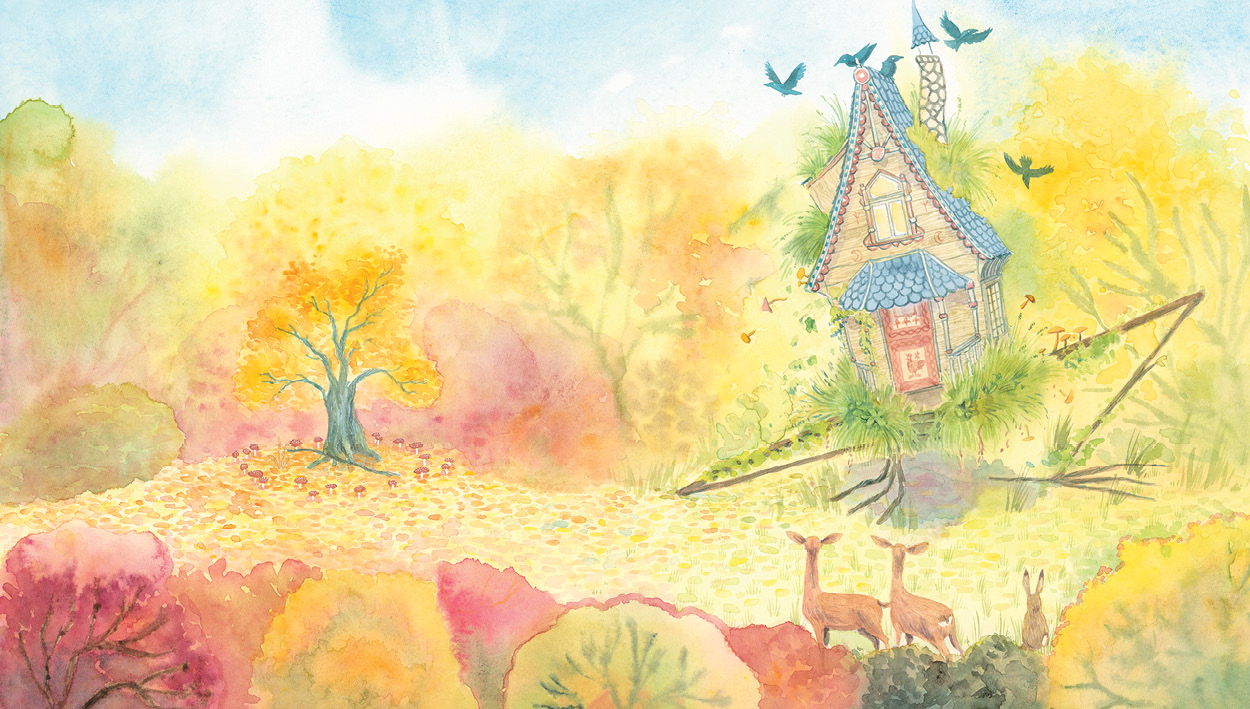
What to do? Creaking, the little house stood up and set out on a journey. Would it find a witch in need of a house?
We chat to Sophie Pluim the author and illustrator of the charming fairy tale The Little House that Needed a Witch to find out a bit more about how she came to create this book.
What inspired you to create this story?
I used to create really detailed watercolour illustrations that took a long time to make. But the ideas kept coming faster than I could produce so I decided to make small scenes to get the ideas down quickly. Those often were just bare landscapes and that was a little dull, I thought. So I painted little houses on chicken legs in these landscapes. Morning, day and night. Cute little houses, cabins and walking castles. I enjoyed it so much.
So before I even started to make this book I had been drawing little houses on chicken legs for years!
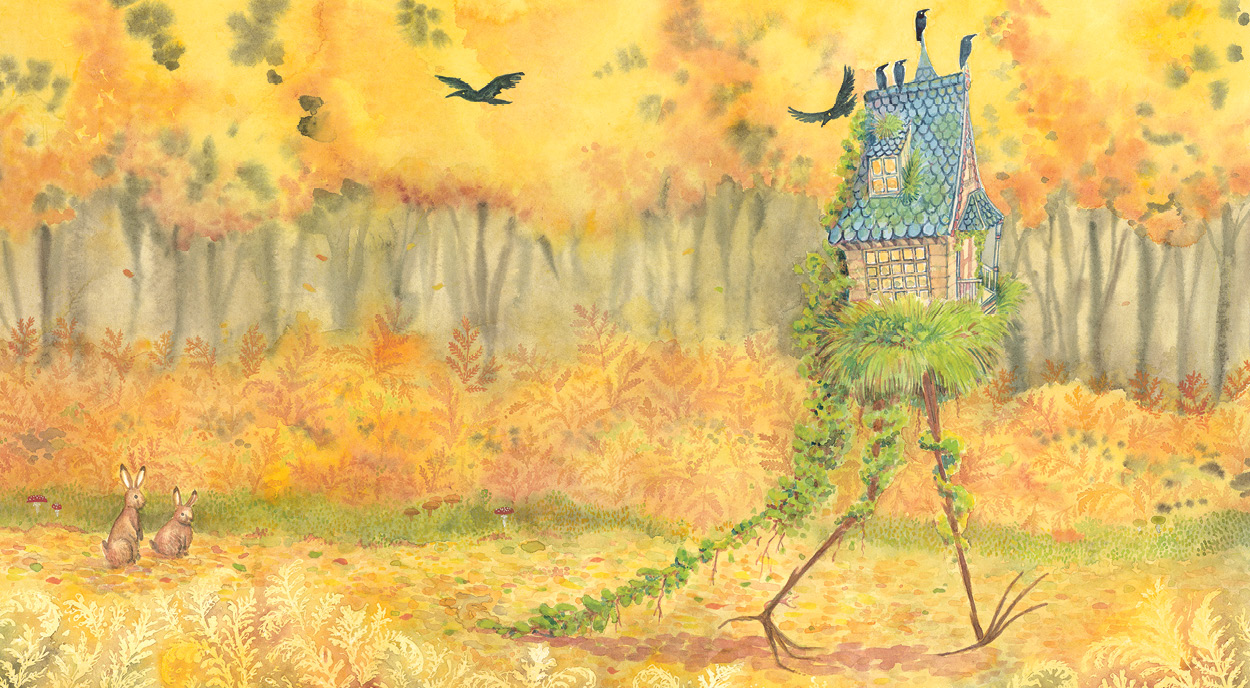
I usually think in scenes, not stories. But after a while the story of the house that went looking for a new resident came to me. This story was a great way to allow me to take the house through a range of lovely landscapes.
What materials and techniques did you use for the book’s illustrations?
The book is made with different kinds of watercolours. For the backgrounds I used Talens Ecoline liquid watercolours. Their bold colours give me a great base for the landscapes, especially the skies, like in the illustration at the seashore.
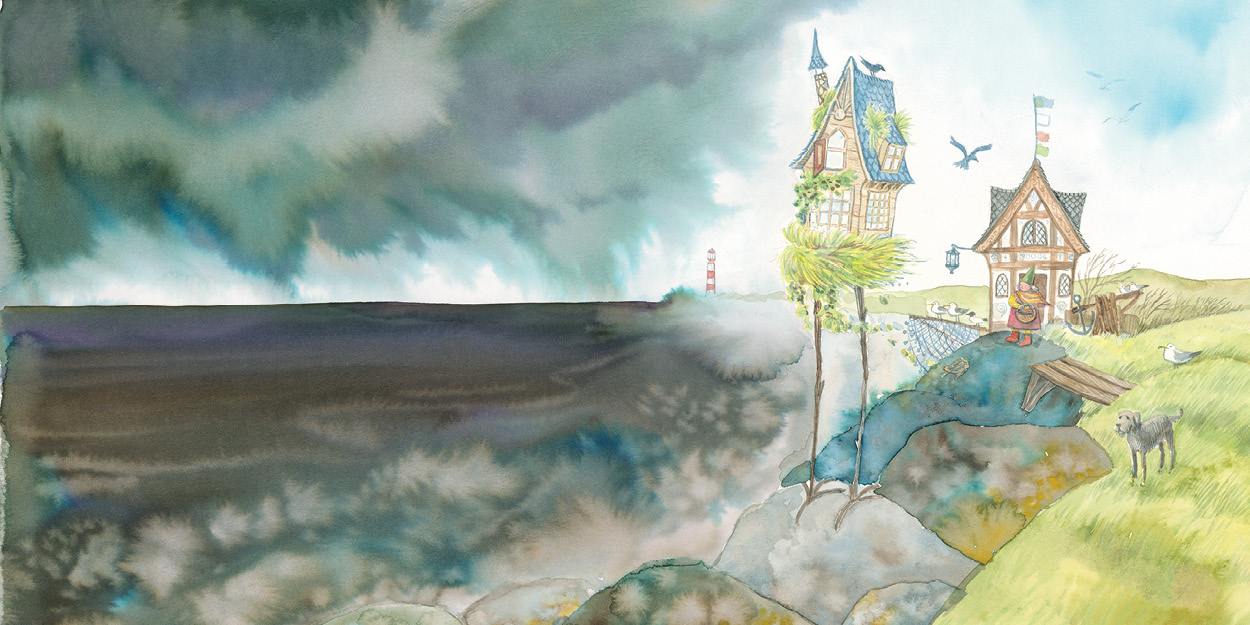
For the houses and human characters I used Winsor and Newton professional watercolours. Indigo is my favourite watercolour of theirs. Combined with their series 7 brushes I’m able to create really fine details.
What did you most connect with in the story and how did that come out in your illustration work?
The part I connected most with in this story is the house traveling through different landscapes, weathers and seasons. That’s a dream to me. I honestly still can’t get enough of that idea. So I’m still drawing little baba yaga houses and meanwhile I’m saving up for a campervan!
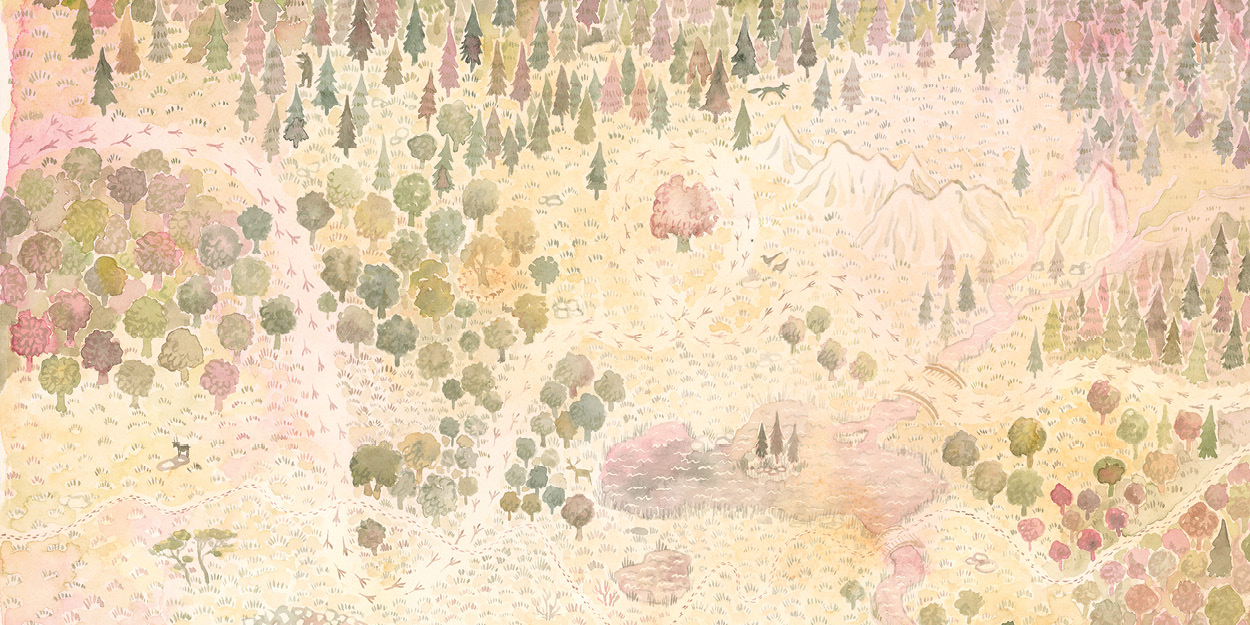
Across the title page I made a playful map with chicken footprints and human footprints to show the journey in a different way.
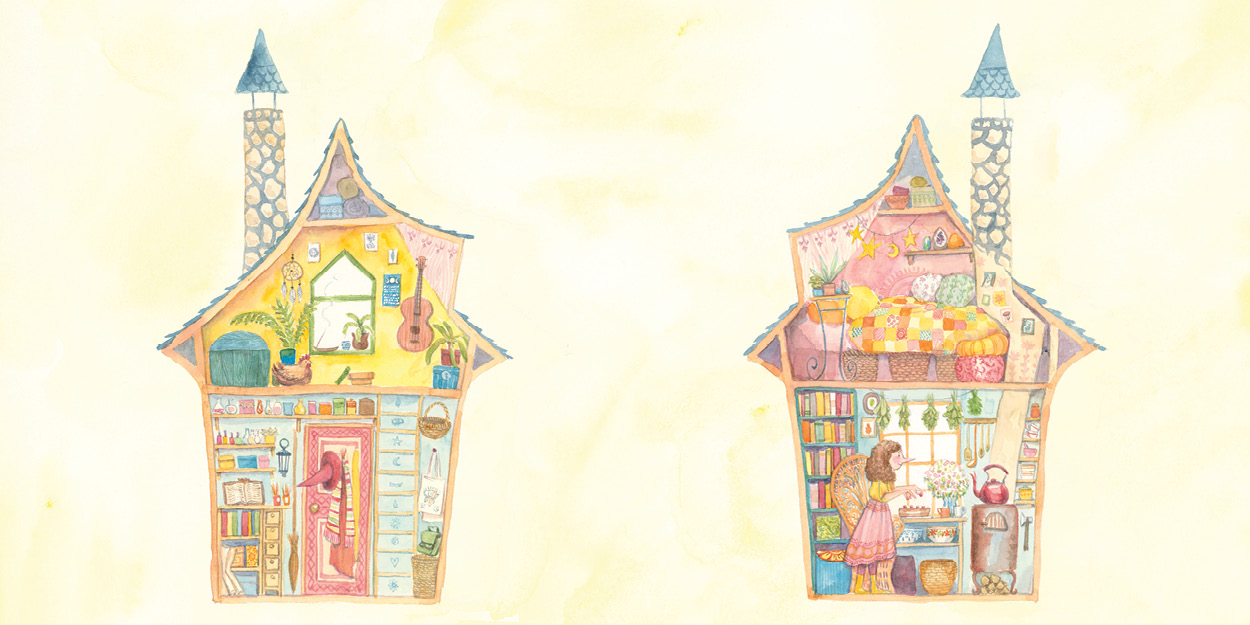
When I thought all the illustrations were complete Uitgeverij Ploegsma (who first published this book in Dutch) suggested the idea of adding a cut through of the houses as endpapers. I wasn’t sure I’d be able to have time to do this but I had to agree that it would be really lovely to have the interiors of the houses as an addition.
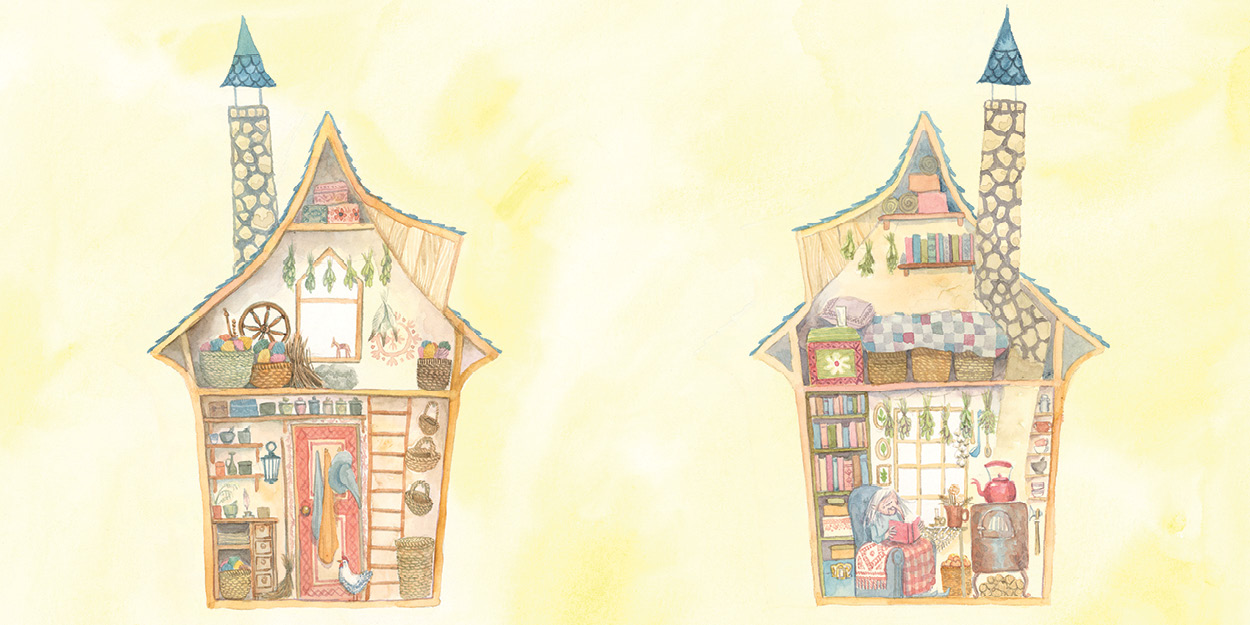
Thankfully, I was able to get a little more time to work on this so I created the interior of both the old witch’s house and the young witch’s house. I was so pleased that I did! I loved expanding the little universe by taking the viewer inside the house.
What’s your favourite illustration in the book and why?
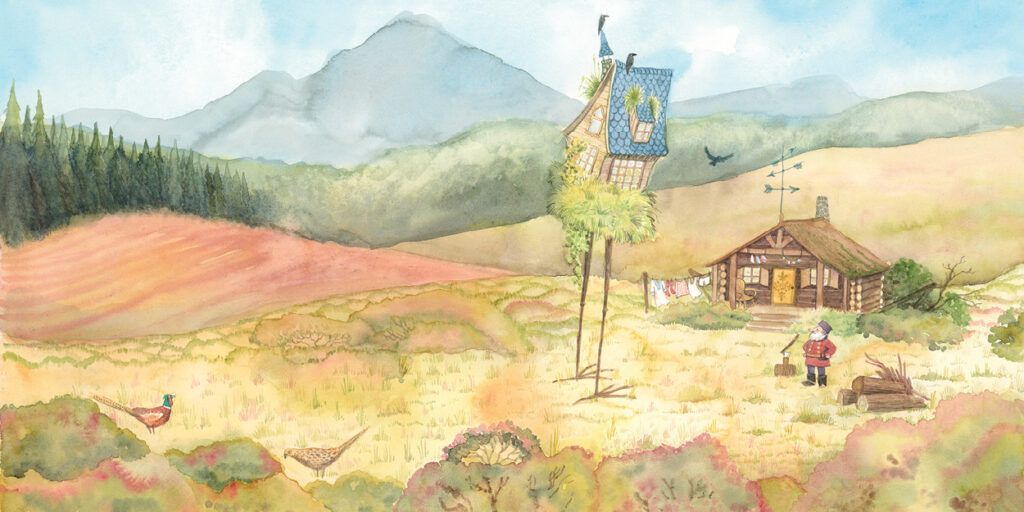
Hmmm, my favourite illustration. It’s hard to choose! Today I think my favourite might be the one with the woodchopper, probably because I want to go to the mountains and enjoy the smell of the woods. But tomorrow another one might be my favourite!
About the author
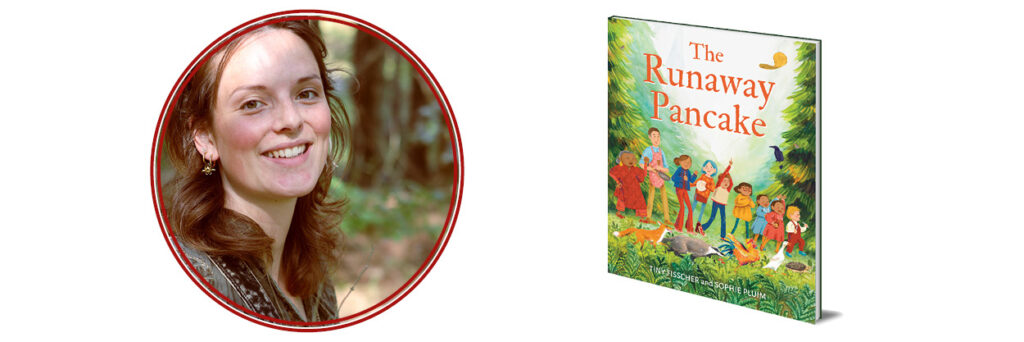
Sophie Pluim is an acclaimed children’s author and illustrator based in The Netherlands. Since graduating from Utrecht School of the Arts in The Netherlands she has illustrated picture books, middle-grade and young adult novels. Sophie draws much of her inspiration from nature and enjoys adding fantastical elements. She is also the illustrator of The Runaway Pancake.


